
Specialty · Boats & trailers
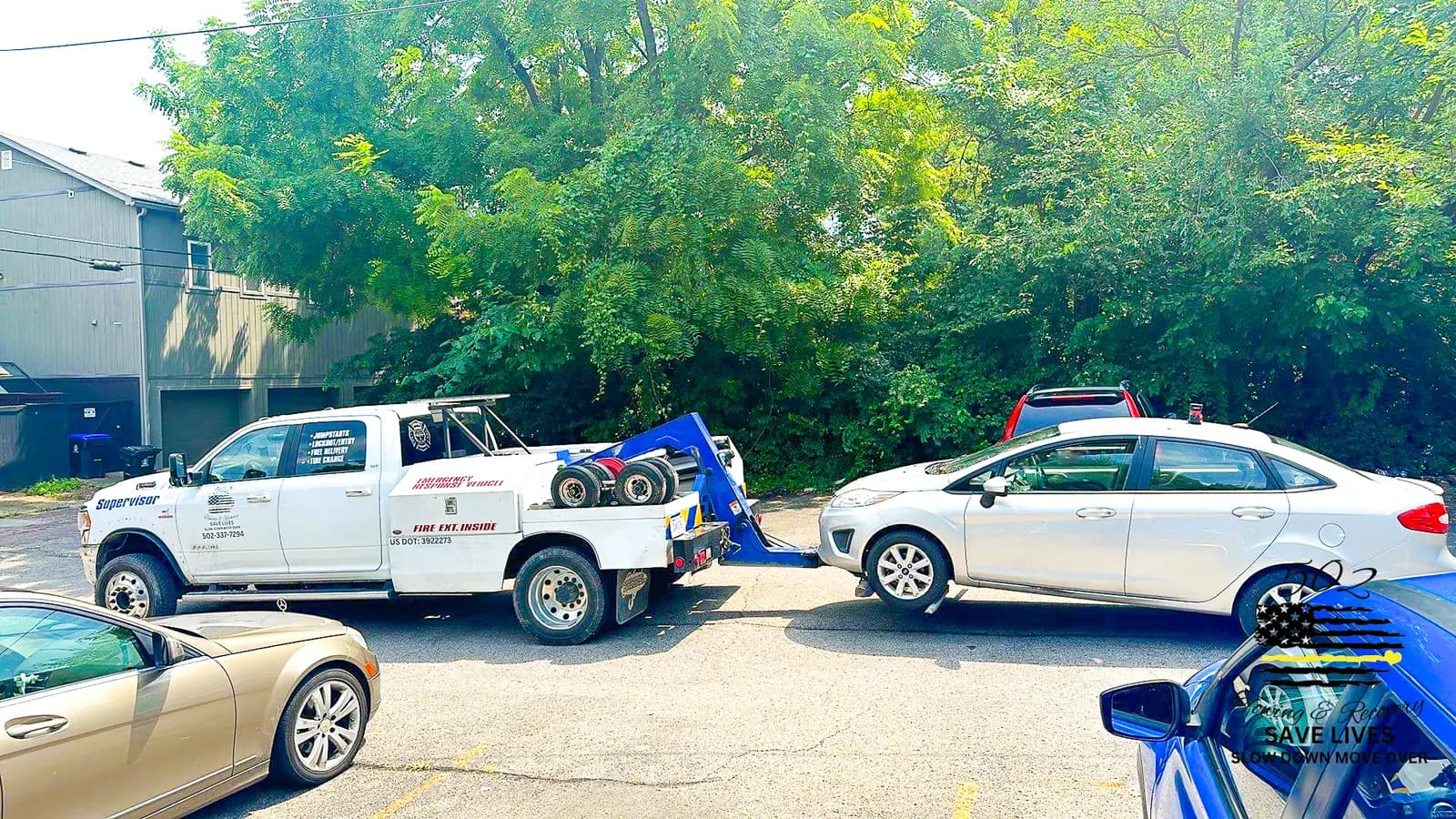
Boat & Trailer Towing in Louisville, KY
Boats and trailers need special handling — surge and electric brakes, long overhangs, tongue weight, and sway control. Proper hitching and a load-balance check before anything moves.
What we tow
- Boat and trailer combinations: bass boats, pontoons, runabouts, small sailboats, and jet skis on double or stack trailers.
- Utility and cargo trailers, single or tandem axle, loaded or empty.
- Car haulers and equipment trailers, weight and access dependent.
- Camper and travel trailers within our weight range.
What we check before moving it
- Tongue weight and load balance, because a badly balanced trailer sways at highway speed.
- Coupler, safety chains, and breakaway cable condition.
- Surge or electric brake function, and whether the trailer's brakes work at all.
- Tire condition and age — trailer tires fail from dry rot far more often than from wear.
- Bunk and roller support on a boat trailer, so the hull is carried where it's designed to be carried.
Common calls
- A blowout on the trailer axle at the ramp or on the interstate.
- A tow vehicle that broke down with the trailer still attached.
- Moving a boat between a marina, a storage lot, and a repair shop.
- Recovering a trailer that's jackknifed or slid off a ramp.
Documentation you can actually use
- Time-stamped photos: pre-load condition, hookup points, plate and VIN, and drop-off confirmation.
- Ordinance-aligned: our processes are built around LMCO and the relevant KRS requirements for Louisville and Bullitt County.
- Itemized receipts: clear service descriptions and timestamps, ready for insurance, an employer, or a property manager.
Frequently asked questions
Can you tow the boat and the tow vehicle together?
Not on one truck. If your tow vehicle has broken down with a trailer attached, that's two moves — call and we'll work out the order and quote both.
Do you tow campers and travel trailers?
Within our weight range, yes. Give dispatch the length and loaded weight when you call.
The trailer tire blew out. Can you just change it?
Often, yes — that's a roadside call rather than a tow. If the wheel or hub is damaged, it becomes a tow.
Need a tow truck in Louisville or Shepherdsville right now?
Call and talk to a live dispatcher who will give you the price, the ETA, and exactly what to expect when your driver arrives. No vague windows. No mystery fees.
24 hours a day, 7 days a week · Shepherdsville, KY · dispatch@502recovery.com